
News&opinions
Conversations on climate crisis
(Text written by Robert Taicutu – second year within the Master program, as a paper for the class Climat, Environment and Energy – a humanities perspectives. It uses concepts discussed within the class and has a touch of dystopia).
The storm has stopped at last. Millions of sub-atomic particles of sand, concrete, dust and other elements that are floating around perpetually in the Badlands, have not stopped their almost never-ending dance. Winds that once upon a time comforted the ever-lasting green land, the animals, trees, flowers, insects – now are cutting through the ruins of old buildings, abandoned cars, dead trees, rusty playgrounds like a heavy sword that has a single goal, that of destroying everything in its path and put it to the ground. The luminescent rainfall that lasted for no more, no less than 5 minutes has also stopped. Here and there, some laid out bricks and concrete blocks or some asphalt areas were punctured a few millimeters because of the luminescent and radioactive rain that swoop the Badlands once in a blue moon. But they do leave significant scars over the barren land.
Boto has come out of the hiding, from the antique store that he just went into before the storm has started. His little dusty and, along the way, rusty tracks have led him to this store in hopes of finding something in the shape of a claw or hook or anything usable for his left hand. Boto has lost his original claw in another previous ‘expedition’, searching for artifacts from the Before World. A world in which he was born and done his tasks with the utmost diligence. Because his main task was to find and supply the much bigger machines with parts in order to create the biggest industrial-grade excavators in the world, ready at any minute to be transported and used in exploiting the last areas ‘alive’ in the Before World: alive because of the high density of coal, rare minerals and other earthly elements extracted to sustain human civilization. That was back then.
(Text written by Cristina Popescu, second year within the Master program, as a paper for the class Climat, Environment and Energy – a humanities perspectives).
Via Transilvanica (a project of Tășuleasa Social Association) is a 1.400 km tourist route that crosses Romania from Putna to Drobeta Turnu-Severin. The project’s goal is to promote tourism by highlighting nature and cultural-historical heritage.
An analysis of the discourse of the project’s initiators (and how the discourse evolves over the years), of the public it addresses, of the relationships that the route’s builders have with local communities, reveals a series of limits that, over time, can lead to the emergence of social hierarchies and imbalances in the human-nature relationship. Starting from these observations, I propose to analyze Via Transilvanica project through the lens of the concept of social ecology, as formulated by political philosopher Murray Bookchin. Bookchin’s social ecology identifies ecological crises as rooted in social problems, particularly hierarchies and domination: “the very notion of the domination of nature by man stems from the very real domination of human.” (Bookchin, 1982, p. 1)
A look at the values and beliefs promoted by Via Transilvanica helps us understand the ideology behind the project. More precisely, what are the ideas and attitudes that shape its understanding of the social (and political) world? And, ultimately, what defines its actions?
Via Transilvanica’s mission is to identify and promote development opportunities for the first long-distance route in Romania, considering the following values: community, care for nature, volunteerism. This social dimension attributed to the project is defined by the slogan “the road that unites”. (Via Transilvanica crosses 10 counties and passes through approximately 400 communities, with their ethnic, cultural, historical and geographical diversity, and 12 sites included in the UNESCO World Heritage).
You can read the whole essay here.
How to enrich and protect green spaces in dense urban communities?
In order to maintain a healthy balance within big urban cities, there is the need for large and of good quality green spaces. The problem with the quantity of the green spaces in Bucharest is quite popular - there are just a few, bearing in mind the number of population living here. The city was on the verge of infringement because of pollution. Lack of green spaces is part of this problem.
But the discussion about quality is the complicated one. For decades, local public administration saw good green spaces as those with lawns and perennial flowers. These kind of spaces are water intensive, require considerable public funds in maintaining and are very low protectors of biodiversity. The more natural, the better for all habitats.
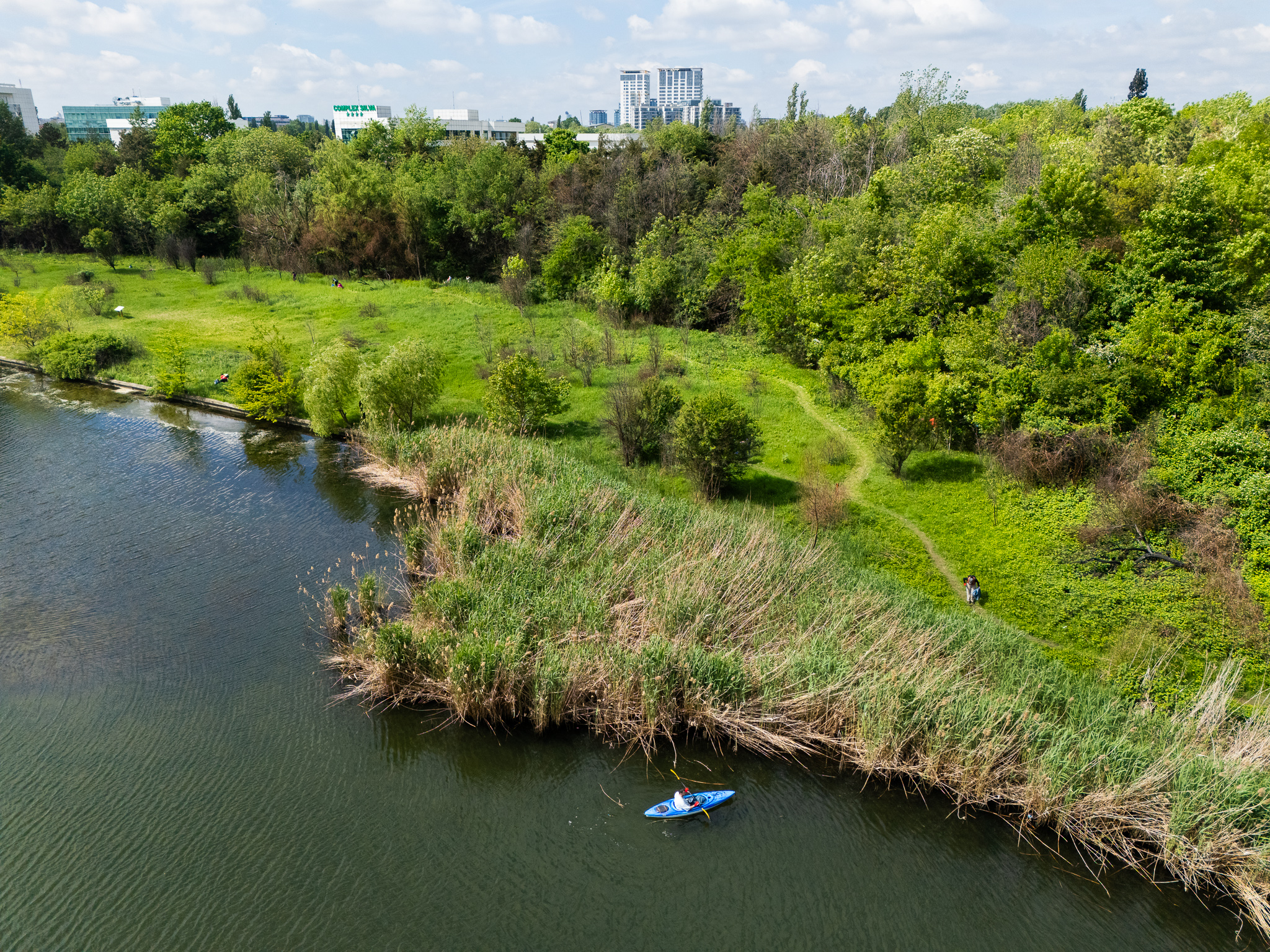
Natural Park București Association was the first to propose and to advocate for green spaces that are just that - green spaces. Fostering for all sorts of insects, birds, frogs and other forms of life, these spaces are both beneficial for the health of the citizens and of the creatures that live in the city.
After having established the first natural park within an urban area, Natural Park Văcărești, the association succeeded in having the first locally protected area - Petricani meadow.
These two spaces are as close to the nature as it can be. Guidelines into how to deal with local climate crisis are abundant in explaining why this is the best solution for communities.
(Photo source: Natural Park București Association)
How climate change affects us differently. Mainly based on social class
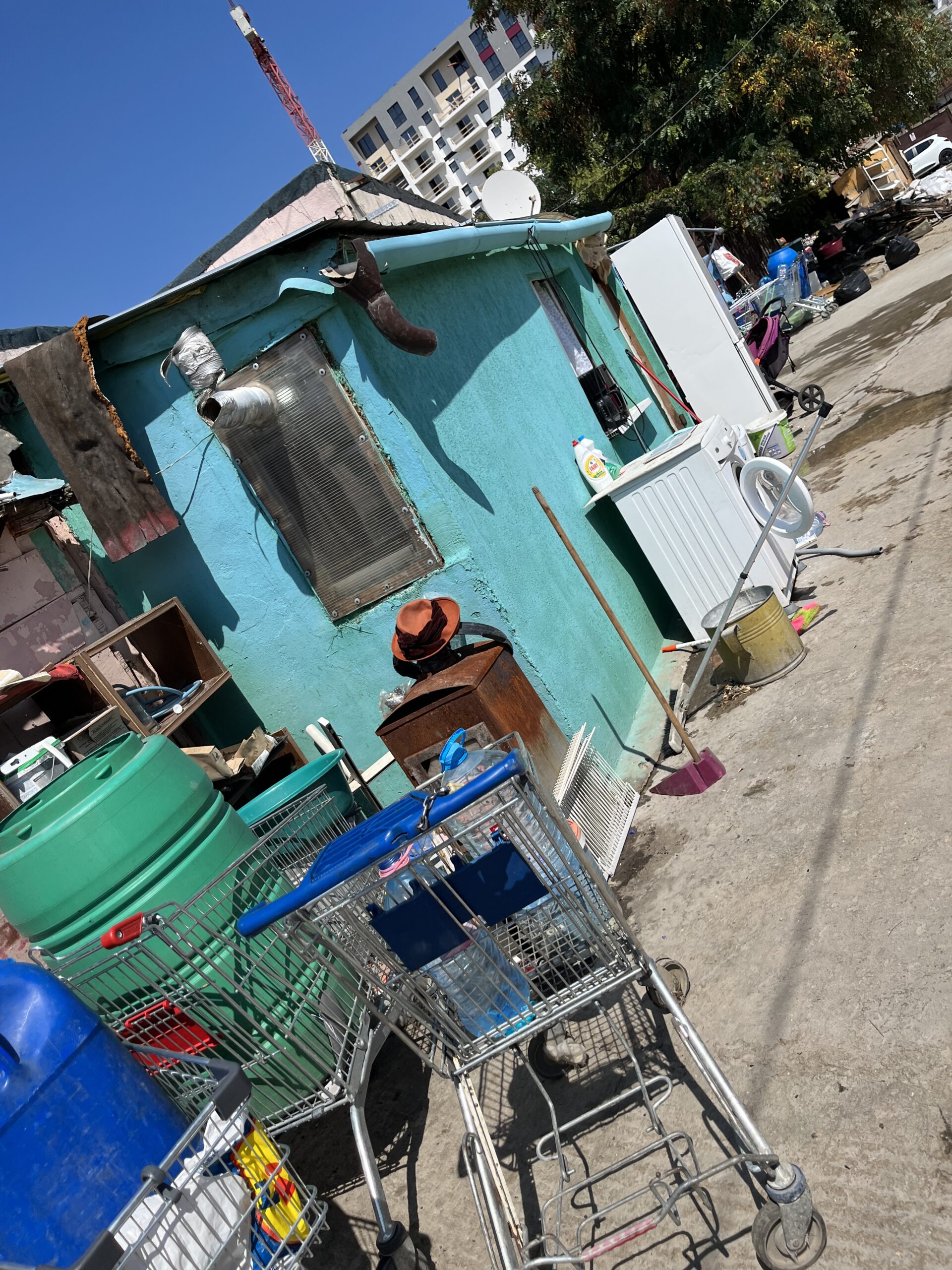
Friedrich-Ebert-Stiftung Foundation published a study focusing on the heat weaves in Bucharest. The report is three-folded. The first section focuses on the current meteorological parameters and the possible future temperatures for Bucharest (both optimistic and pessimistic scenarios are presented).
The second part of the report focuses on how the activity of local administration in Bucharest responds to the local manifestation of the climate crisis.
The last section describes the daily lives of the urban poor and precarious workers in times of extreme heat. This section depicts how these people experience heat weaves and which are the coping mechanisms in order to make the heat bearable.
The report Bucharest under heat weave is available here.
join the public conversation